

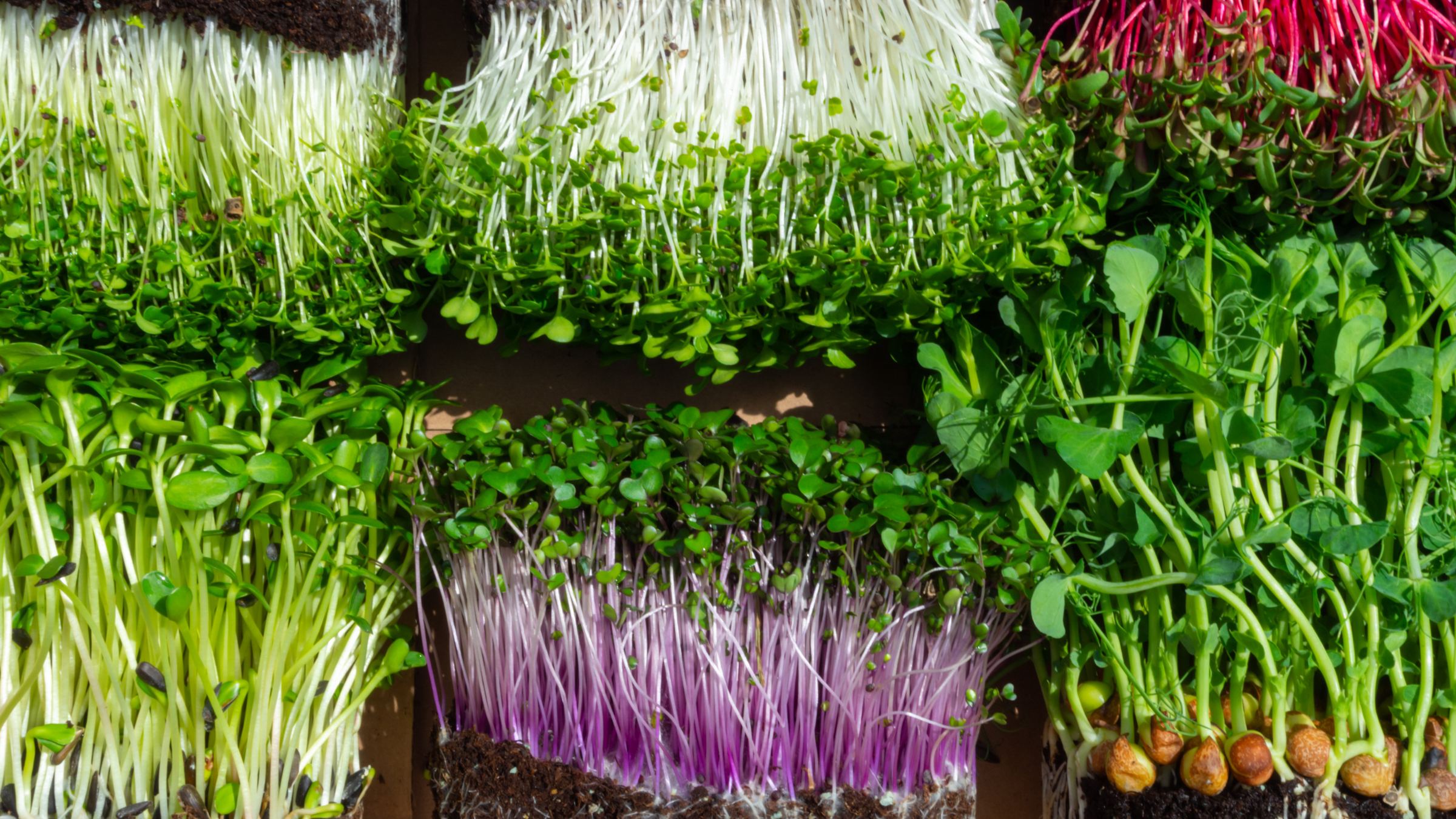
Walk into a good grocery store today and you may notice something that wasn't there a few years ago.
Small trays and packages of intensely green plants sit alongside the familiar lettuce, spinach, kale and herbs. In a café or restaurant, they may appear as a colorful garnish on a sandwich, scattered across a salad, or placed carefully on top of an entrée.
They are microgreens, and while they may be small, they are becoming a big part of how we think about fresh food.
Small plants. Big flavor.
A microgreen is a vegetable harvested at its earliest stage: after the first “true” leaves appear, but long before the plant reaches maturity. Think of it as the middle point between a sprout and a full-grown vegetable. A sunflower microgreen isn't a sunflower seedling you'd recognize from a garden bed; it's a one- to two-inch plant, harvested within one to three weeks of germination, stem and leaves intact, ready to eat whole.
Almost any vegetable, herb, or grain can be grown as a microgreen: radish, broccoli, arugula, basil, pea shoots, red cabbage. Each retains the distinct flavor of its mature counterpart, just concentrated into a smaller package.
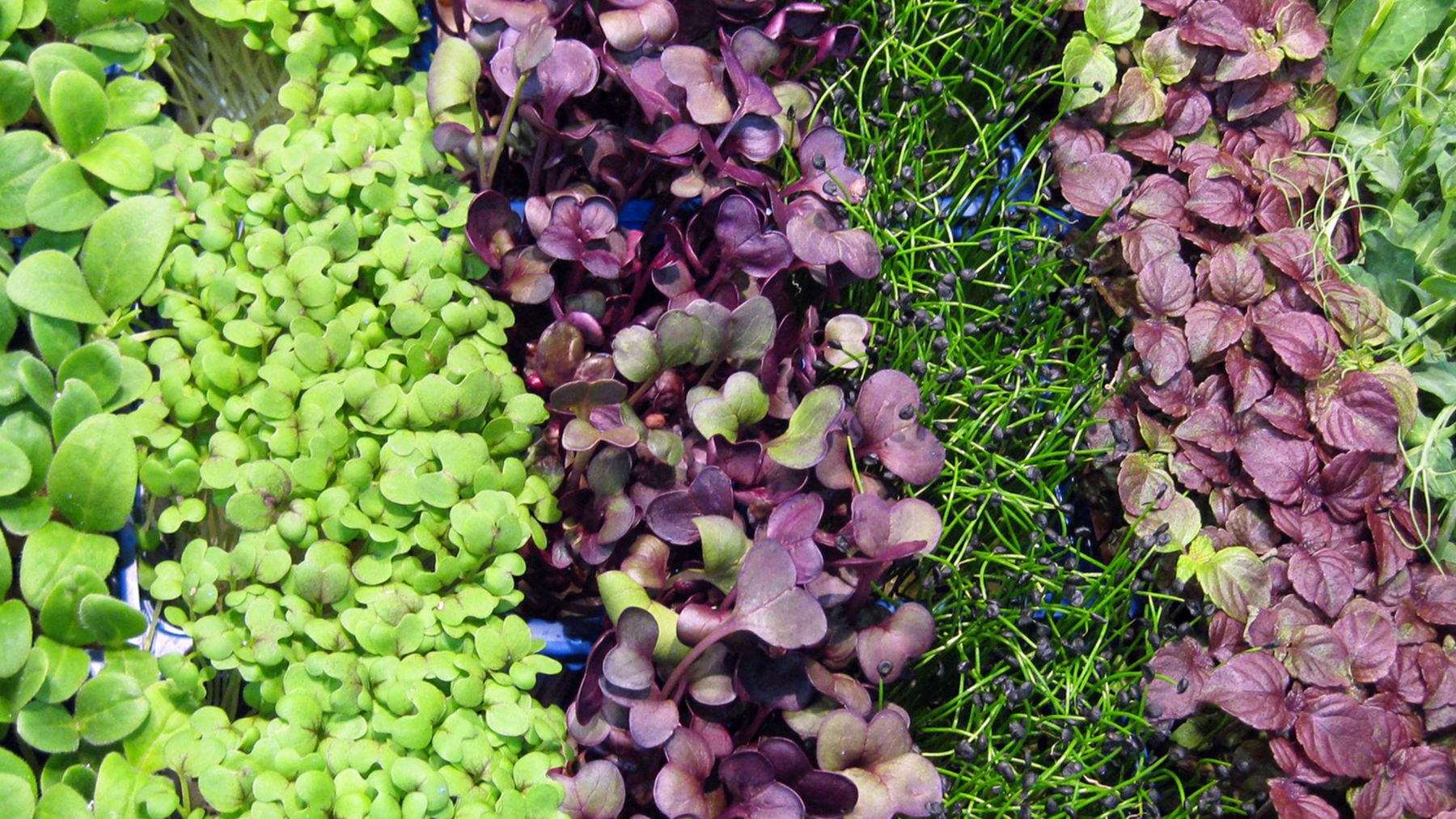
A handful of arugula microgreens can bring a surprising peppery bite to a dish. Radish microgreens can add heat. Pea shoots offer sweetness and freshness. Sunflower shoots have a satisfying texture and nutty flavor.
That intensity is one of the reasons chefs love them.
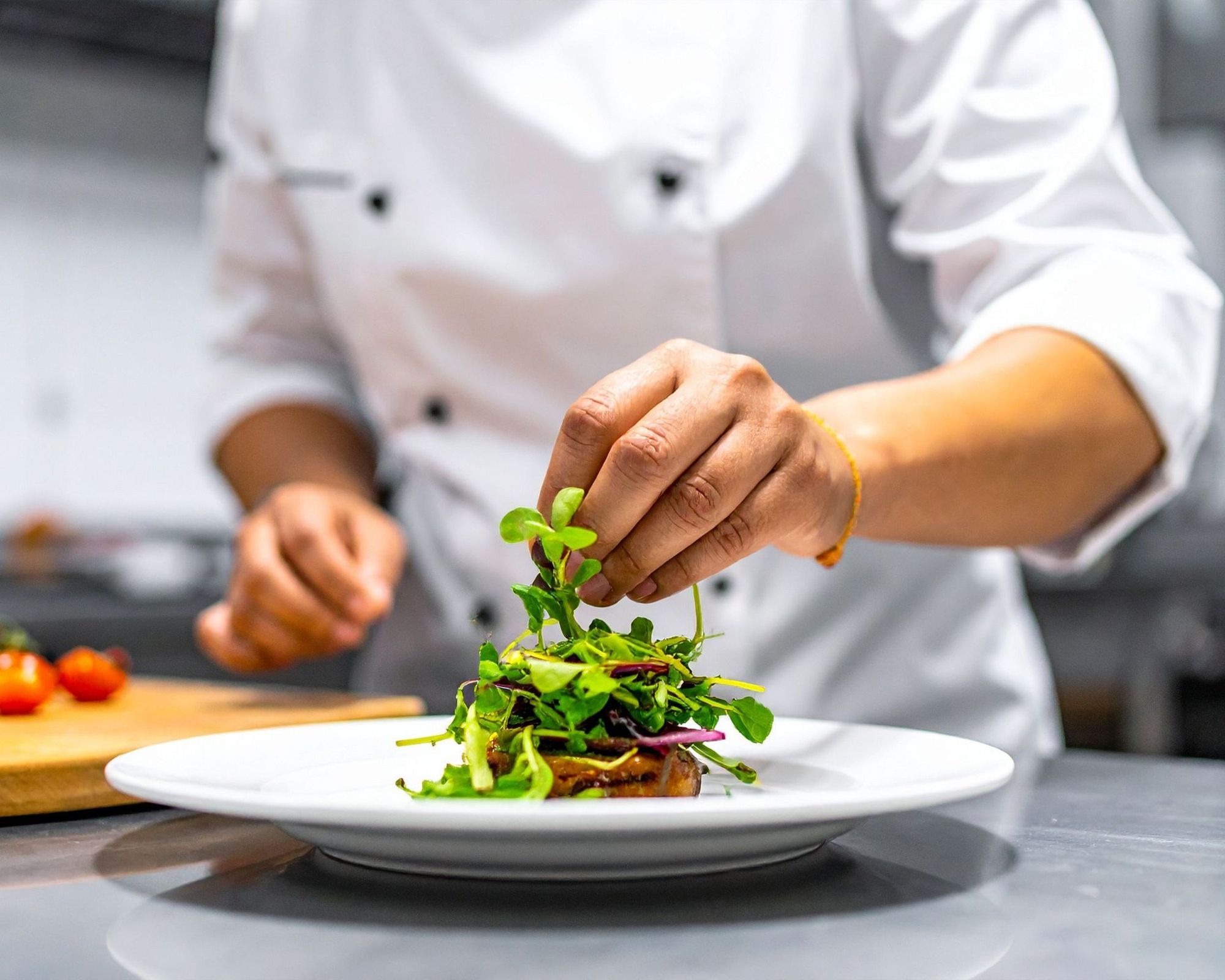
Microgreens aren't simply decoration. They can change the character of a dish, adding flavor, texture, color, and freshness in a remarkably small package.
More than a garnish
The appeal of microgreens goes beyond the plate. The flavor story has a nutritional parallel.
Because they are harvested young, microgreens can contain concentrated levels of certain vitamins, minerals, and beneficial plant compounds. Multiple studies, including widely cited USDA research, have found that many microgreens contain significantly higher concentrations of vitamins and antioxidants, by weight, than their mature-plant counterparts. Red cabbage microgreens, for example, have been measured with several times the vitamin C of mature red cabbage.
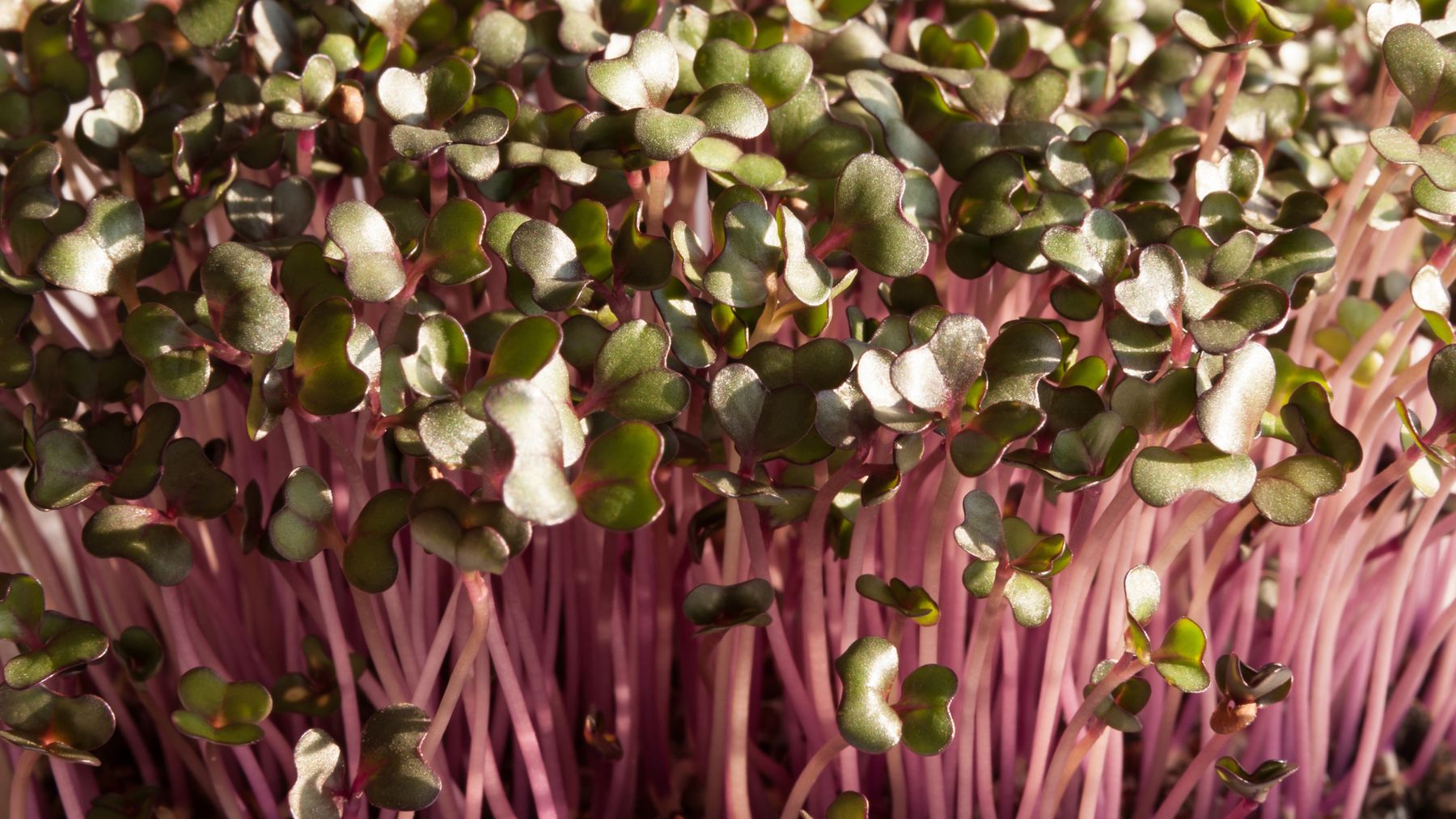
Those factors are exactly why microgreens have moved well beyond fine dining. Consumers are increasingly looking for foods that let them add nutritional value without sacrificing flavor or adding volume.
Microgreens fit that desire remarkably well.
They are fresh. They are visually appealing. They are flavorful. And they make it easy to add more nutrition to everyday meals.
Why are consumers noticing?
Walk through a grocery store and you'll see a broader change taking place.
Consumers are paying more attention to where their food comes from, how fresh it is, how it was grown and what it contributes to their health. At the same time, people want food that tastes good and fits easily into busy lives.
Microgreens check many of those boxes.
They can be incorporated into salads, sandwiches, wraps, bowls, smoothies, and prepared meals. Restaurants use them to elevate presentation and flavor. Cafés and foodservice operators can use them as a simple way to make familiar dishes look and taste more interesting.

And unlike many food trends, microgreens aren't asking consumers to learn an entirely new way of eating.
So, will we be seeing more of them?
That is where the story gets interesting.
Growing microgreens consistently at commercial scale is considerably more complicated than growing them on a kitchen counter or in a small greenhouse.
Freshness matters. Growing conditions matter. Quality and consistency matter. Shelf life matters, and perhaps most importantly, the economics of producing a highly perishable product have to work.
At Verdánt Organics, we believe the answer isn't simply to grow more microgreens.
It is to rethink how they are grown.
The Verdánt approach
Verdánt has developed its proprietary CIPA™, Closed-Loop Indoor Precision Agriculture, around the idea that different crops can work together rather than in isolation, creating a unique symbiotic growing system.
Inside a Verdánt facility, microgreens and oyster mushrooms will grow in individually controlled rooms where temperature, humidity, light, air and other growing conditions can be precisely managed.
And because we will control the growing environment from seed to harvest, we won't be dependent on the weather, seasonal growing conditions or the limitations of an open field.
The result is a system designed around using resources more intelligently while producing food with remarkable consistency.
Our objective is to shorten the microgreen growing cycle, increase yields and deliver a product that is thicker, greener, more flavorful and exceptionally fresh.
Why microgreens matter to Verdánt
Consumers want better food. Chefs want better ingredients.
Grocers want products that differentiate themselves and give shoppers a reason to come back.
And producers need ways to grow more food using fewer resources while delivering consistent quality.
That is why microgreens matter to Verdánt. We don't see them as a garnish.
We see them as an important part of the future of fresh food.
At Verdánt Organics, we're not simply growing microgreens. We're building a new way to grow them, one designed around precision, freshness, resource efficiency and, most importantly, great food.
New here? Start with Who is Verdánt, and what problem are we solving? or read our story. To follow along as we build, sign up for our newsletter: one email a month, nothing more.