

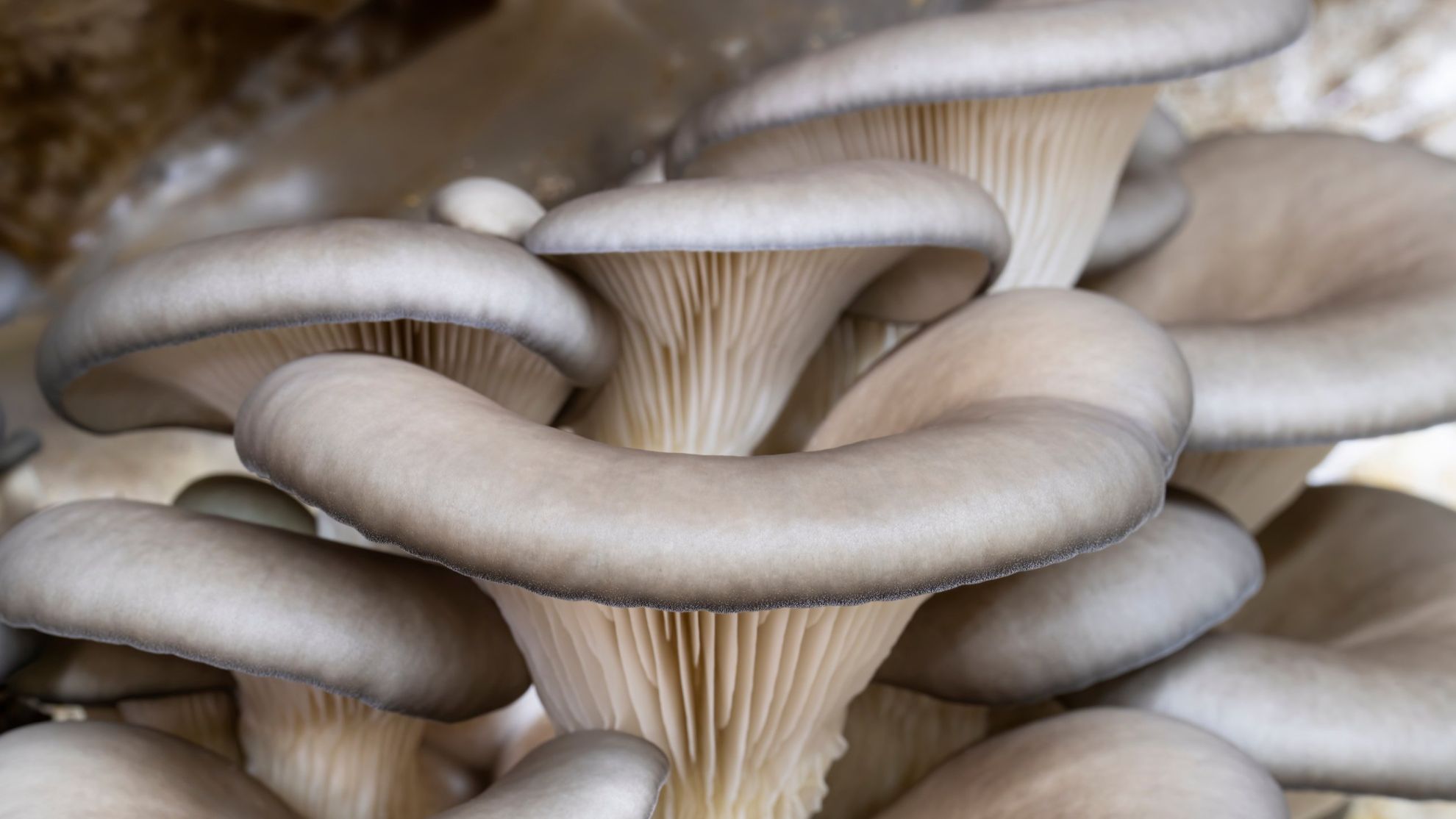
What comes to mind when you think of mushrooms?
For many people, it's a thin, sometimes rubbery slice added to a salad, pizza, or stroganoff. What most people don't know is that the familiar white button, cremini, baby bella, and portobello mushrooms are all the same species, Agaricus bisporus, simply different varieties or stages of maturity. These familiar mushrooms are compost-loving fungi, typically cultivated indoors on large beds of compost.
The mushrooms we aim to grow at Verdánt Organics are dramatically different.
Welcome to the world of gourmet and specialty mushrooms.
Nature's recyclers
Unlike their compost-loving relatives, many specialty mushrooms prefer growing on hardwood, straw, and other plant-based materials. These fungi produce enzymes capable of breaking down complex organic compounds like lignin and cellulose, which lets them grow on materials that many other organisms cannot easily digest. In doing so, they act as nature's recyclers, breaking down organic matter and returning nutrients to the environment.
Shiitake, lion's mane, and oyster mushrooms all belong to this group. Of these, oyster mushrooms are widely regarded as one of the best introductions to both growing and enjoying specialty mushrooms.
What makes blue oysters stand out
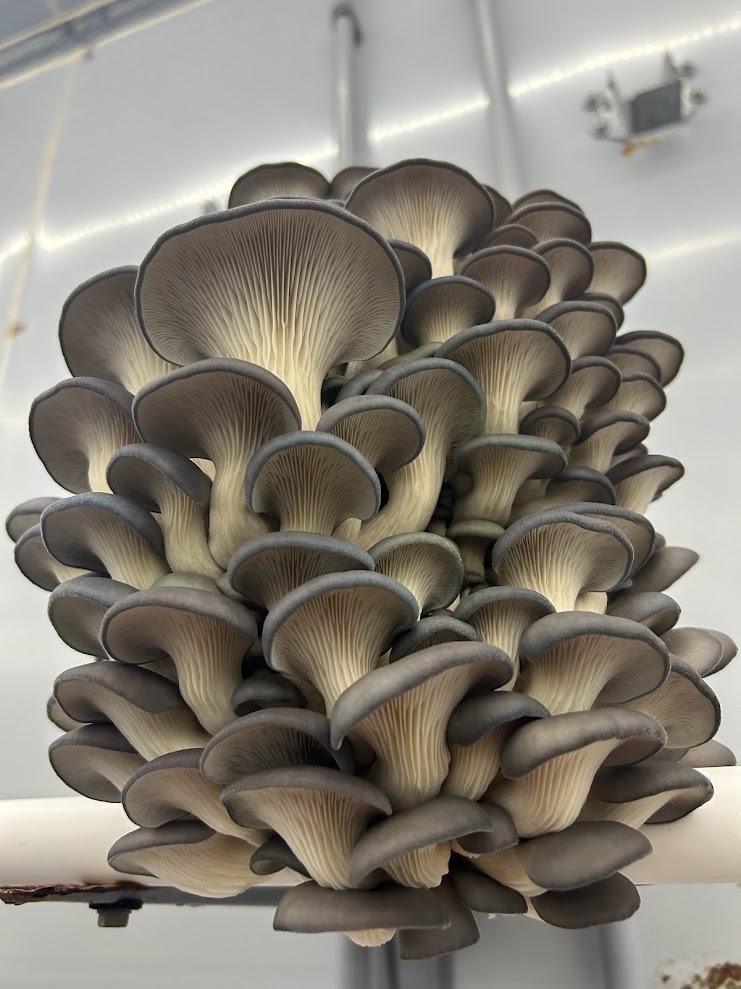
Oyster mushrooms grow in beautiful, dense clusters of overlapping stems and broad, fan-shaped caps. Their delicate gills extend from beneath the cap and run down toward the stem, creating a distinctive layered appearance. Blue oyster mushrooms are particularly striking, with colors that range from deep blue-grays to lighter, sandy-gray tones. While some fungi can look almost otherworldly, blue oysters have a more familiar appearance, which makes them an approachable first step into specialty mushrooms.
From a grower's perspective, there is a lot to appreciate. Oyster mushrooms are adaptable, grow quickly, and can produce impressive yields. Under the right conditions, a cluster can develop from tiny mushroom pins to harvest-ready in less than a week. Watching them grow is one of my favorite parts of mushroom cultivation. What begins as a small collection of pins can seemingly transform overnight into a dense bouquet of fully formed mushrooms. Their rapid growth and forgiving nature also make them an excellent species for learning, experimenting, and refining growing methods.
Why chefs reach for them
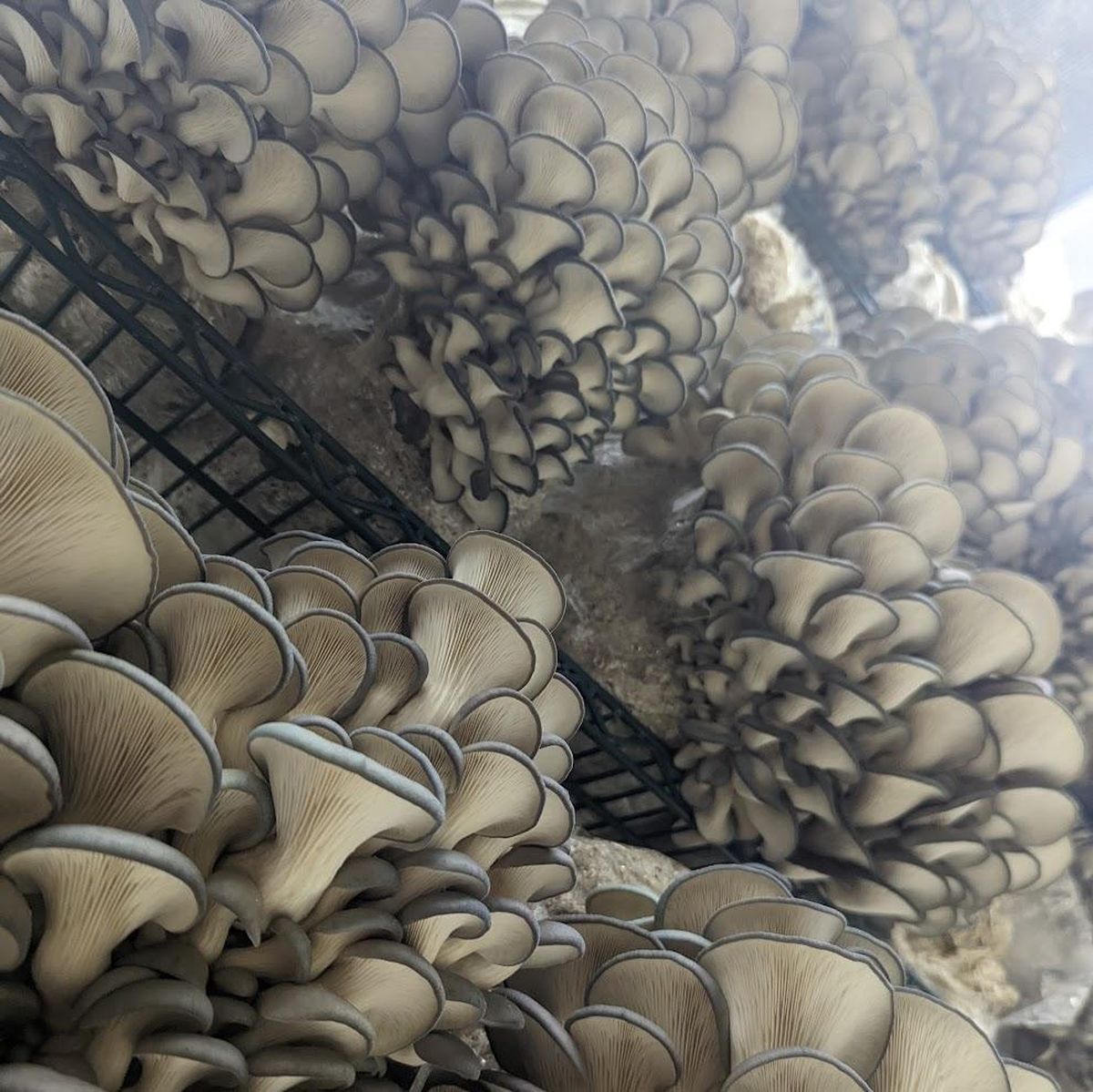
Chefs have their own reasons for loving blue oysters, and most of them come down to how the mushroom behaves in a hot pan. The caps and stems hold their shape through high heat, so they sear and roast without collapsing into the mush that gives mushrooms a bad name. Pulled apart by hand, the clusters shred into strands that take on a smoky, almost meaty character, which is why they show up in everything from grain bowls to tacos to plant-forward entrées. Their flavor is mild and savory rather than earthy, so they carry whatever a cook puts with them: garlic and butter, miso, chili, fresh herbs. And because a cluster is a single, clean unit, there is very little trim and almost no waste.
That is where we come in. Our goal at Verdánt is to give kitchens a supply they can count on: consistent clusters, harvested at peak, delivered recipe-ready with no washing needed, and with up to three times the shelf life of conventionally grown mushrooms. Fewer rejected deliveries, less spoilage in the walk-in, and a product that performs the same way every time it hits the pan.
Good for the plate, good for you
Blue oysters also bring more to the table than texture and flavor. According to USDA nutrient data, a 100-gram serving of raw oyster mushrooms contains about 33 calories and roughly 3 grams of protein and 2 grams of fiber, with very little fat and sodium. They are a source of B vitamins, including niacin, riboflavin, and pantothenic acid, along with potassium, copper, and phosphorus. Like other mushrooms, they contain naturally occurring compounds such as beta-glucans and the antioxidant ergothioneine, which researchers continue to study. Exact values vary with variety and growing conditions, but the short version is simple: a lot of flavor and satisfying texture for very few calories.
The real reward
While I could spend days talking about growing mushrooms, the real reward is getting to eat them.
Blue oysters have a mild, savory flavor and a tender, meaty texture that makes them versatile in the kitchen. Their broad caps and dense stems give them a satisfying bite, and when cooked in a hot pan they sear like meat, developing a golden-brown crust and crispy edges. Sautéed with garlic and butter, roasted, tossed into pasta, or folded into a favorite dish, they are an easy way to explore something beyond the familiar button mushroom.
For most of us, mushrooms have long been limited to a handful of familiar varieties at the grocery store. But there is an enormous world of fungi beyond the button, each with its own textures, flavors, and growing requirements.
We are looking forward to growing blue oyster mushrooms at Verdánt Organics, and we are even more excited for you to try them.
New here? Start with Who is Verdánt, and what problem are we solving? or What are microgreens, and why do they matter? To follow along as we build, sign up for our newsletter: one email a month, nothing more.